
GOOD INTENTIONS DON’T CHANGE OTHER PEOPLE’S CHARACTER
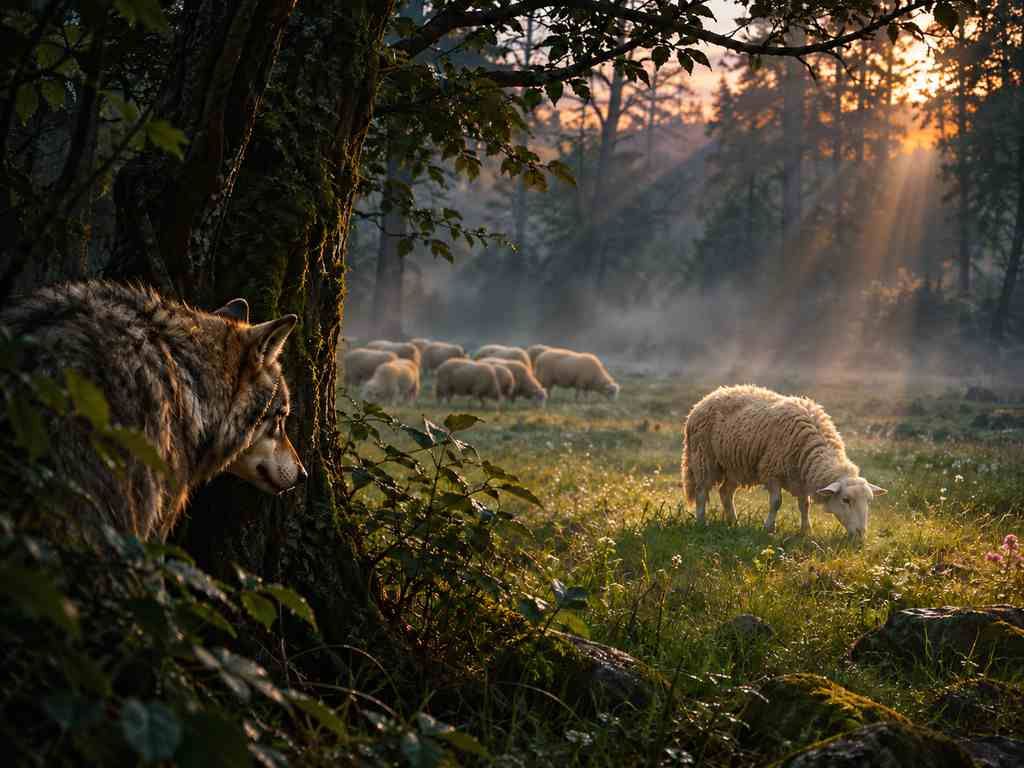
In the forest, there is no such thing as good or evil; there are only the strong and the weak. A sheep's moral character does not change a wolf's intentions. While the sheep grazes, the wolf watches and waits for the flock to scatter. When one of them wanders away, the wolf seizes the opportunity. That is because the wolf acts according to its own nature and interests, not the sheep's good intentions.
This analogy, often used to illustrate Machiavelli's understanding of power, offers a thought-provoking lesson about human relationships as well.
People sometimes use their own moral values as a standard for judging the behavior of others. Because they are honest, they assume that others will be honest too. Because they keep their promises, they expect others to show the same consideration. They want to trust others because they themselves are trustworthy. They extend goodwill and expect a similar attitude in return.
But life does not always work that way.
Two people may find themselves in the same situation yet interpret it in entirely different ways because they see the world through different lenses. One may approach the other with genuine trust, while the other sees that trust as an opportunity to serve personal interests. One may believe a friendship is developing, while the other may be calculating how to gain an advantage. What one person considers a boundary may be nothing more than an obstacle to overcome in someone else's eyes.
The fundamental mistake here is assuming that others share our values simply because we hold them ourselves. In reality, people's behavior is shaped by different values, interests, expectations, and moral standards. Not everyone is obliged to think as we do, act as we do, or attach the same importance to the things we value.
That is why observing how people respond to boundaries is just as important as trusting them.
To understand someone's true character, we should pay attention not only to what they say but also to how they use the opportunities they are given. Their reaction when they encounter a boundary for the first time can reveal a great deal. Do they respect a refusal? Do they honor the trust placed in them? Or do they interpret another person's goodwill as permission to push a little further?
These may seem like minor behaviors, but they offer important clues about human nature.
Of course, none of this means that we should become suspicious of everyone, live constantly on the defensive, or give up trusting people. Trust is the foundation of healthy relationships. However, trusting someone is not the same as being careless. Being kind and maintaining personal boundaries are not contradictory either. We can be both honest and cautious.
There is an important distinction worth remembering:
"Good intentions reveal what kind of person we are, not what kind of person the other person is. Their character is revealed by how they behave when given an opportunity."
Ultimately, a sheep's good intentions do not change a wolf's nature. So let us never give up being good people, but neither should we allow our goodwill to become a weakness that others can exploit for their own benefit.