
GOVERN YOURSELF, NOT THE WORLD
Reflections on a Saying of Marcus Aurelius
“It is not your concern how unjust or corrupt other people may be. You have only one responsibility: to remain honest, just, and virtuous, no matter what.”
Marcus Aurelius
Too often, we fall into the trap of justifying our own shortcomings by pointing to the faults of others. Phrases such as “Everyone does it,” “Who can afford to be honest these days?” or “Good people always lose” may seem, at first glance, to express the harsh realities of life. More often than not, however, they are little more than elegant excuses for silencing our conscience.
In a single sentence, Marcus Aurelius exposes the weakness behind these justifications. Our true responsibility lies not in how other people choose to live, but in the kind of person we choose to become.
Life is not an arena where justice always prevails. In today’s world, we frequently witness hard work being overlooked, merit pushed aside, and honest people paying the highest price for doing what is right. At the same time, those driven solely by self-interest often rise more quickly, accumulate greater wealth, and even earn public admiration.
In moments like these, a quiet yet dangerous question begins to echo in our minds:
“Why should I keep doing the right thing?”
It is precisely in answering that question that character is formed.
Is virtue simply behaving well when everything is going our way? Genuine virtue reveals itself when we refuse to abandon goodness, even after it appears to have lost its value. Honesty matters most where deception is rewarded. Justice survives only because there are people willing to bear the cost of defending it. The clearest sign of self-respect is choosing what is right over what is merely easy.
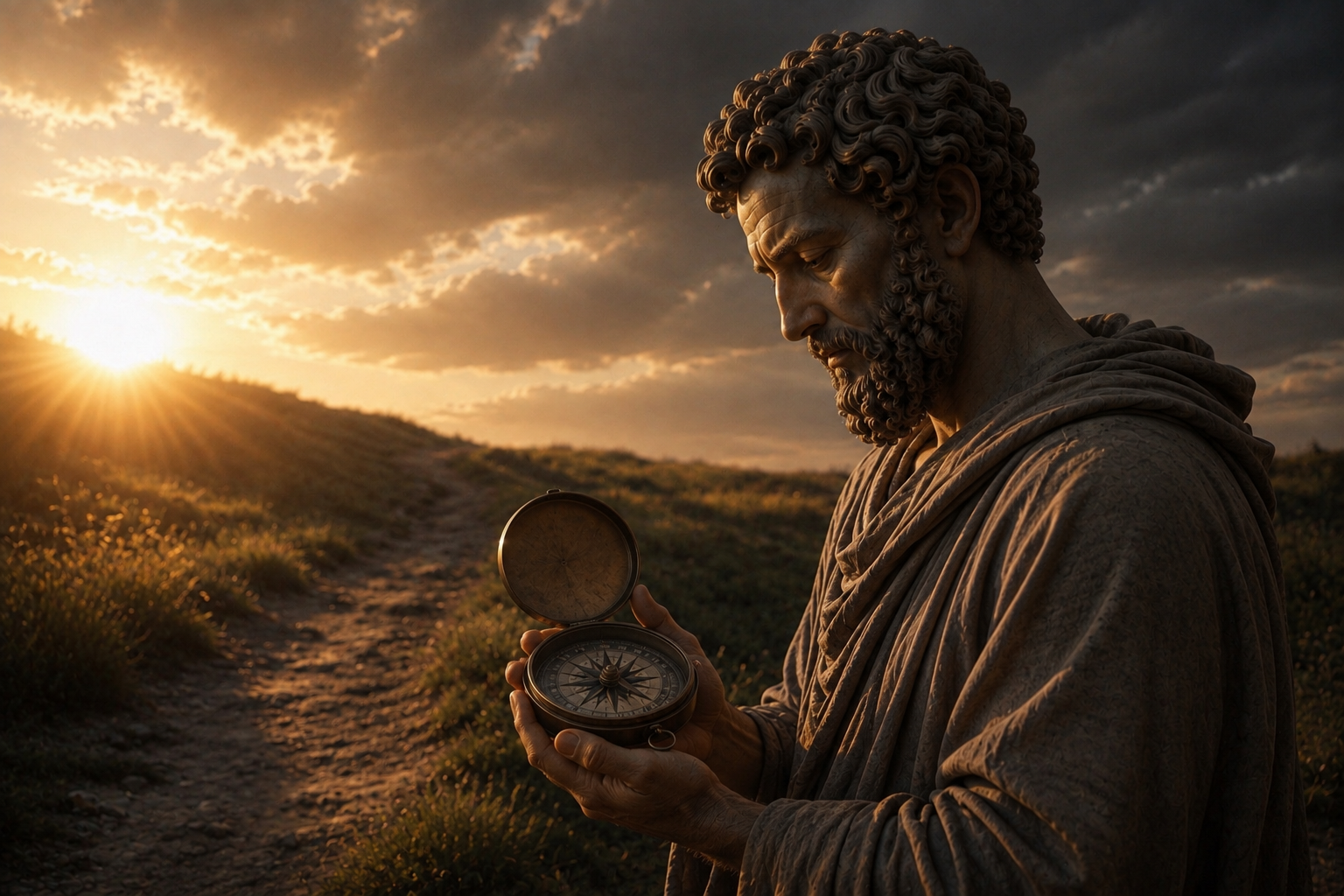
Today, character is too often treated like a garment to be changed according to circumstance. Yet true character is an invisible compass carried within us, quietly pointing us toward what is right. Storms may confuse our sense of direction, but a reliable compass never changes its bearing. As long as we do not lose that inner compass, we will never truly lose our way.
There is another danger in becoming preoccupied with the faults of others. While we are busy describing the darkness around us, we may fail to notice that the light within us is slowly fading. Certainly, we must stand against injustice. Defending justice is a moral obligation. But it is equally important not to allow anger to reshape who we are in the process. History is filled with stories of people who defeated tyrants only to become like them.
True victory is not simply winning. It is winning without sacrificing your conscience.
The foundations of every society are built not first upon laws, but upon character. When everyone expects honesty from others while neglecting it in themselves, trust quietly begins to erode. But when each person takes responsibility for living truthfully, trust gradually takes root again. The greatest transformations rarely begin with loud voices or grand gestures. More often, they begin with the quiet perseverance of individuals who refuse to abandon their principles.
Although Marcus Aurelius ruled one of the most powerful empires in history, his greatest lesson was not about governing others but about governing himself. True mastery is found not in the power we exercise over other people, but in our ability to master our own anger, ambition, and desires. A person who cannot govern himself can never truly be the master of his own life, no matter how much authority he holds over others.
In the end, people are unlikely to remember how much wealth we accumulated, what titles we held, or how many rivals we surpassed. What endures is the imprint of our character. Perhaps the finest tribute anyone could receive is also the simplest:
“He was an honest man.”
Perhaps that is the truest measure of success. We may not always have the power to change the world, but we do have the power to prevent the world from changing who we are. No matter how great the failures or injustices of others may be, we remain fully human only so long as we preserve our conscience. For the greatest victory is not triumphing over others, but remaining faithful to our character despite every challenge life may present.