
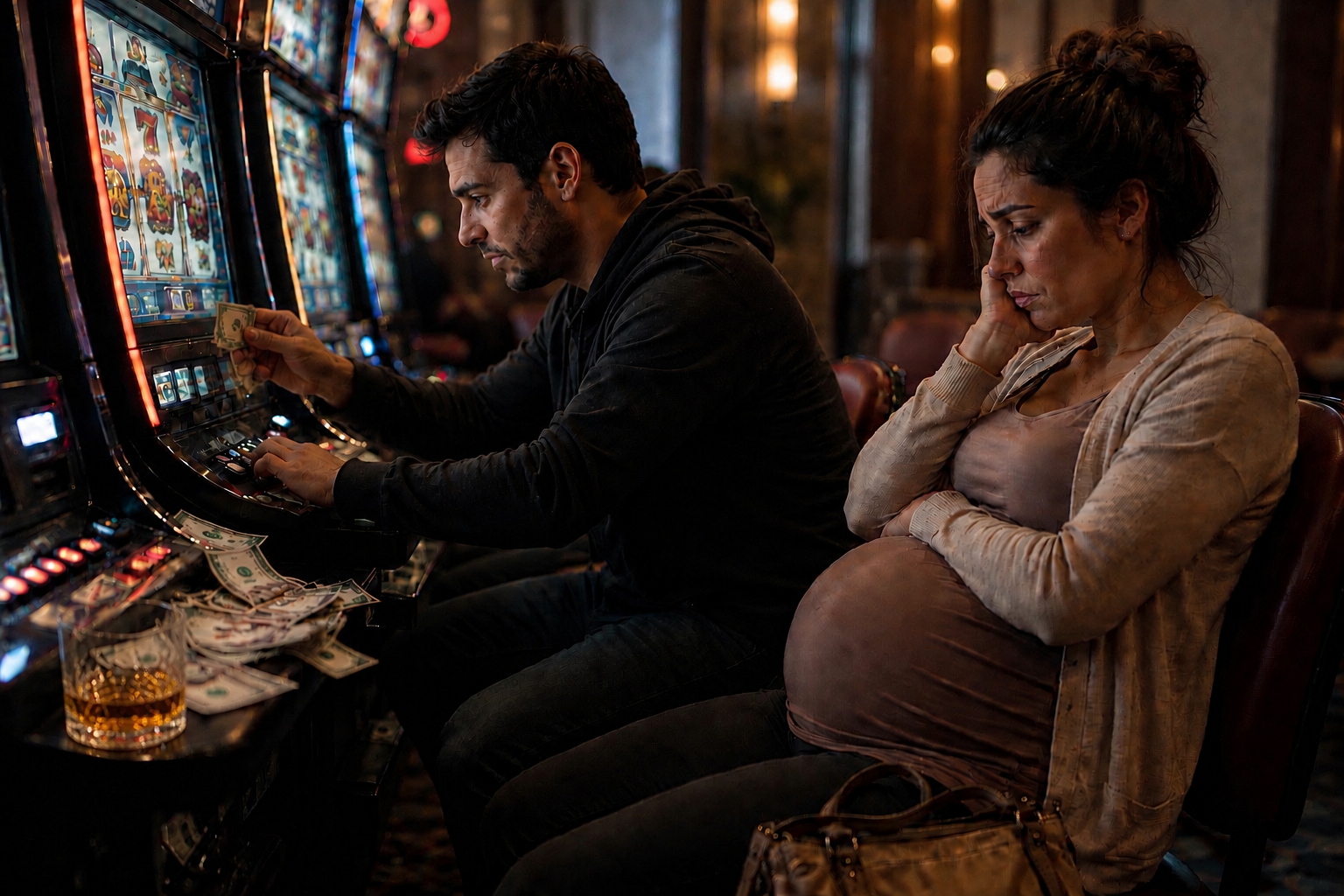
ON WHAT WE LOSE AND WHAT WE DO NOT LOSE
Throughout our lives, we gain many things and lose many others. Yet not every loss carries the same meaning or weight. Some losses shake us for a while and then make room for new beginnings. Others can turn the balance of our lives upside down.
And this is where the real question begins:
What we lose matters far more than the loss itself.
The following words express this truth in a simple yet striking way and invite us to reconsider what we truly value:
“If you lose your money, you lose nothing. If you lose your health, you lose something. If you lose your character, you lose everything.”
At first glance, these words seem to offer a simple ranking of money, health, and character. But when we consider them more deeply, they reveal something important about the true values of life.
Losing money is, of course, not easy. Financial difficulties can make life challenging, create anxiety, and sometimes even drive us toward despair. Yet money has one important characteristic:
It can be earned again.
A person can work, produce, pursue new opportunities, and, over time, replace what was lost. A fortune we do not possess today may once again be within our reach tomorrow. Money is an important tool that can make life easier, but it is not the fundamental value that defines who we are.
When we lose our health, however, the situation changes.
It is often only after our health begins to fail that we truly understand what a great treasure it was. Illness can make even the simplest activities of daily life difficult. It can diminish our freedom, energy, and enjoyment of life. Moreover, not every loss of health can be completely reversed.
Nevertheless, many health problems can be overcome or improved through treatment, time, patience, and healthy habits. For this reason, health is a treasure far more valuable than money, and protecting it deserves far more attention than we often give it.
The loss of character, however, is a much deeper wound.
Character is not something we merely possess. It is part of the foundation of who we are. Our honesty, our willingness to keep our promises, our refusal to abandon our principles when circumstances become difficult, and the fairness we show toward others are all expressions of character.
A person can lose money and earn it again. A person can lose health and struggle to regain it. But when character is compromised and trust is lost, restoration becomes far more difficult.
When someone lies, repeatedly breaks promises, betrays another person’s trust, or abandons their principles for personal gain, they are not merely committing an isolated act. They are slowly eroding something that may have taken years to build.
Trust is rarely built overnight, yet a single serious betrayal can damage it profoundly.
Even when trust can be restored, it requires time, genuine remorse, accountability, and consistent behavior. Sometimes, despite every effort, the trust that has been lost never fully returns.
For this reason, a person’s true wealth lies not merely in what they possess, but in what they refuse to sacrifice in order to possess it.
Can someone with great wealth but no one’s trust truly be considered rich?
If a person holds a powerful position but their word has lost its value, what meaning does that position really have?
At the end of life, what remains is not merely what we accumulated, but what kind of person we became along the way.
Therefore, we should not allow material losses to destroy us. We can rebuild. We can begin again.
We should not neglect our health either. We should recognize that protecting it is often far easier than trying to regain it after it has been lost.
But above all, we must protect our character.
Because one of the greatest forms of wealth a person can possess is the trust others place in them.
Perhaps the deeper message of these words is this:
When we lose money, we lose an opportunity.
When we lose our health, we lose a part of our freedom.
But when we lose our character, we risk losing ourselves.
A person’s true wealth is not measured by what they have in their pocket, their bank account, or their name.
It is measured by the values they are able to preserve, especially when preserving them comes at a cost...