
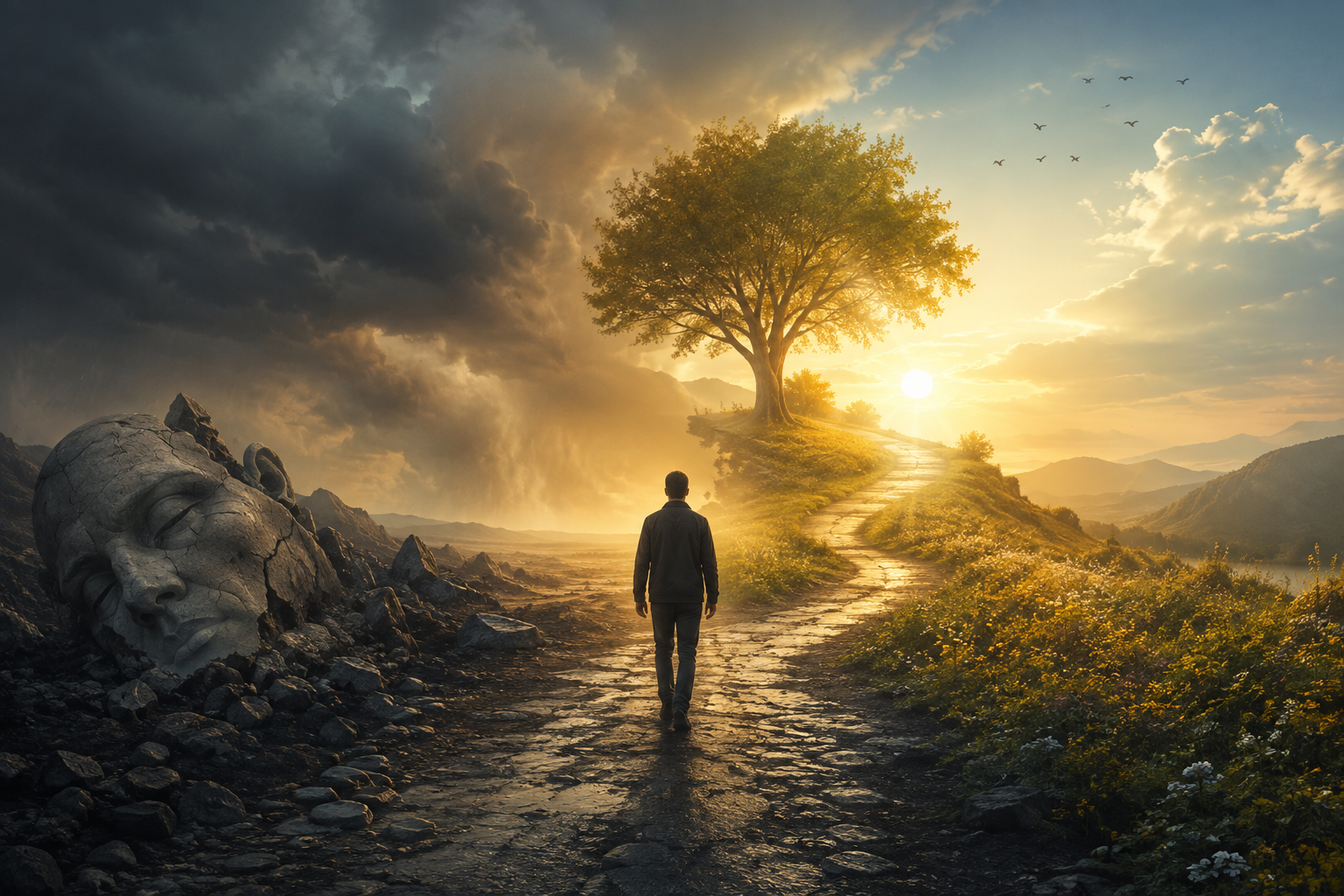
PAIN: THE INVISIBLE MASTER THAT HELPS US GROW
In the Footsteps of Marcus Aurelius, Nietzsche, and Rumi
Most of us spend our lives searching for happiness while trying to keep pain as far away as possible, as though it were an unwelcome guest that should never knock on our door. Yet life follows its own order, independent of our wishes and expectations. No matter how much we resist it, there are certain truths we cannot change. One of the greatest is this:
People often experience their greatest growth during their most difficult seasons.
Comfort may bring peace, but it rarely transforms us. A person who never encounters obstacles may never truly discover the limits of their own strength. Unexpected loss, deep disappointment, or failure, however, forces us to confront ourselves. More often than not, genuine transformation begins at precisely that moment.
Marcus Aurelius taught that although we cannot control everything that happens around us, we can choose how we respond. At first glance, this may sound like a simple idea, yet it is one of the most difficult principles to practice. When we are hurt, our first instinct is often to wish we could change the event that caused the pain. When that proves impossible, we may seek refuge in anger, resentment, or despair.
Perhaps the real issue is not only what happens to us, but the meaning we assign to it. The same storm can carry two people to entirely different shores. One emerges consumed by hopelessness, while the other becomes wiser and stronger. The storm may be the same; what differs is the inner world of the person passing through it.
The Stoics invite us to move beyond the question:
“Why me?”
and ask instead:
“What can this experience teach me?”
The first question can tie us to the past. The second opens a path toward the future.
Nietzsche approached suffering from a different angle. In his view, people can be strengthened because of pain, not merely in spite of it. His famous words,
“What does not kill me makes me stronger,”
are far more than a motivational slogan. They express the deeper idea that hardship can reshape human character.
Of course, suffering does not automatically make anyone wiser. The same experience can leave one person withdrawn and bitter while making another more resilient and compassionate. The decisive factor is not simply the intensity of the pain, but the relationship we develop with it.
This is why human growth is often compared to metal being forged in fire. The fire tests what passes through it. Human beings are much the same. Hardship eventually knocks on everyone’s door, but who we become afterward depends greatly on how we respond.
Rumi adds yet another dimension to this understanding. In his poetry, the wound becomes more than a source of pain; it becomes a place of transformation, an opening through which illumination can enter. As long as we imagine ourselves complete, there may be little room for learning. It is often through our broken places that we begin to discover who we truly are. Perhaps patience itself is born there.
Looking back, we can often see this more clearly. The experiences that shape us most deeply are rarely our easiest days. They are found in our losses, our disappointments, the doors that closed before us, the dreams that failed, and the long seasons of waiting. Experiences that once felt like unbearable burdens can later become the quiet architects of our character.
This is one of life’s strange paradoxes. Events that once seemed meaningless, or even cruel, sometimes reveal a different significance with the passing of time. What we once called misfortune may have prepared us for an entirely different path. We cannot say this about every hardship, nor should every suffering be romanticized. Yet life has a way of asking questions whose answers sometimes arrive only years later.
No one escapes suffering altogether. The real difference lies in how we face it. Courage is not the absence of fear, but the willingness to move forward despite it. Likewise, resilience does not mean never being wounded; it means finding the strength to rise again after we have been hurt.
Perhaps we misunderstand success because we measure it only by visible achievements. Reaching the summit is certainly worthwhile, but preserving your conscience, compassion, and humanity along the way is an even greater accomplishment. Applause fades quickly. Character is built in moments when no one is watching.
Sooner or later, life will hurt us. There is no way around that truth. When that day comes, perhaps the most useful question we can ask is:
“What can this pain teach me?”
The answer may not come immediately. We may understand it months or even years later. Even so, asking the question itself can change the way we experience our lives.
In time, we may come to recognize a deeper truth:
Happiness is not a life without pain. Wisdom is the ability to preserve our kindness, our hope, and our humanity even in the midst of suffering.
Perhaps pain’s purpose is not always to stop us.
Sometimes, it simply arrives to reveal a strength within us that we never knew we possessed..