
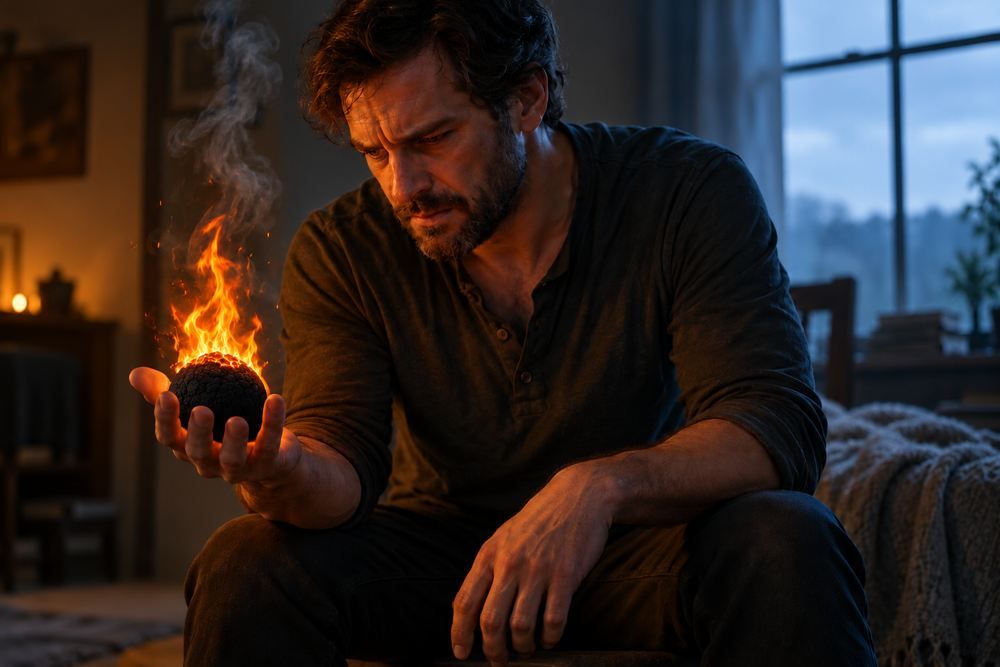
THE FIRE OF ANGER: WHEN WE HURT OURSELVES THE MOST
Has this ever happened to you? Someone says something hurtful, and you feel that if you don't respond immediately, the words will keep bothering you. You want to strike back. You line up your arguments in your mind, sometimes even thinking about how to silence the other person. Yet when the argument is over, you still feel unsettled. You replay what was said, wishing you had thought of one more thing to say. The other person may have forgotten the whole exchange by then. But you are still caught up in it.
One thing I have learned over the years about human relationships is this:
“Just as important as the events that upset us is the way we carry them within ourselves. Sometimes an argument that lasts only a few minutes can spoil an entire day. A careless remark from someone else can keep us thinking for hours.”
But must we lose our own peace because of someone else's behavior?
One day, a student who struggled to control his anger went to a wise master for advice.
Student: “Master, how can I control my anger?”
The Wise Master: “If you wanted to throw fire at someone, who do you think would get burned first?”
Student: “The person holding the fire, Master.”
The Wise Master: “Anger is much the same.”
Student: “Then what should I do when I get angry?”
The Wise Master: “Stop. Take a deep breath. Don't speak until your mind has settled.”
The student thought about this for a while and then looked up. The wise master added one final thought:
“Remember, you cannot control what other people do. But you can decide what kind of person you will be in response to their behavior.”
There is a truth in this brief conversation worth reflecting on. Too often, while trying to change someone else's behavior, we lose control over our own.
Feeling angry is not necessarily a bad thing. We may become angry when we are treated unfairly, when our efforts go unrecognized, or when someone we love is hurt. Sometimes anger helps us recognize a problem we have been ignoring and gives us the courage to stand up for ourselves. The problem is not that we feel anger, but what we do when we are angry.
When we are upset, we often interpret other people's words as harsher than they really are. We add the weight of past disappointments to a sentence spoken in the present. Before we know it, an argument about today's problem has turned into a discussion of things that happened years ago. The original issue gets lost, and all that remains is who spoke more harshly and who had the last word.
Yet winning an argument and solving a problem are not the same thing. Even if we have the last word, we may have damaged the trust between ourselves and the other person. We cannot take back the words we have spoken. Apologizing matters, but not every hurt disappears with a simple apology.
That is why it can help to pause before responding when we feel angry. Taking a few deep breaths, going for a short walk, or postponing a conversation until we feel calmer can change more than we might expect. The situation itself may not change in those few minutes, but our response to it can.
Of course, staying calm does not mean accepting everything in silence. We need to speak up against injustice, say no when necessary, and protect our boundaries. But we do not have to hurt someone else in order to defend ourselves. We can be firm without raising our voices. We can clearly explain why a behavior is wrong while preserving our own dignity.
The real challenge often arises when we believe we are in the right. When we feel we have been treated unfairly, our first instinct is to respond immediately. We may fear that remaining silent will make us look weak or that stepping back will allow the other person to win. But we do not have to answer every remark on the spot. Sometimes it is far wiser to wait until we have calmed down, think about what we want to say, and choose our words carefully.
This is why I find the wise master's fire analogy so meaningful. In anger, we may want our words to hurt the person we are addressing. But before speaking, we should also consider the tension we are creating within ourselves. Anger may seem like a feeling directed at someone else, yet we are the ones carrying it inside. Sometimes the argument has long been over, but we are still repeating the same sentences in our minds. Perhaps we should ask ourselves:
“What kind of person do I want to be when I respond to the way I have been treated?”
The answer does not always mean staying silent or walking away. Sometimes we need to stand up for our rights, sometimes we need to create distance in a relationship, and sometimes we must express our objections clearly. What matters is not allowing the anger of the moment to make all our decisions for us.
We cannot completely control other people's behavior. We cannot make everyone understand us, treat us with respect, or admit when they are wrong. But we can work on our own responses. This is not a skill we master overnight. Sometimes we manage to hold back; at other times, we lose our temper and say something we regret. Then we look back at our behavior, reflect on it, and try to do better the next time.
I believe that getting to know ourselves begins, in part, right here. Recognizing which words easily provoke us and which situations cause us to lose control is the first step toward learning to manage ourselves.
In the end, we cannot always change the person who makes us angry. But we do have some say in how deeply that person's behavior affects us. Someone else's hurtful conduct does not require us to become hurtful in return. Being treated unfairly does not justify behavior we will later regret.
The lesson the wise master gave his student reminds us of a truth we should keep in mind in our everyday lives: the person holding the fire must remember, before throwing it, that they too can get burned.
Because maturity does not mean never getting angry. It means being able to decide, when anger arises, what kind of person we will allow it to make us.