
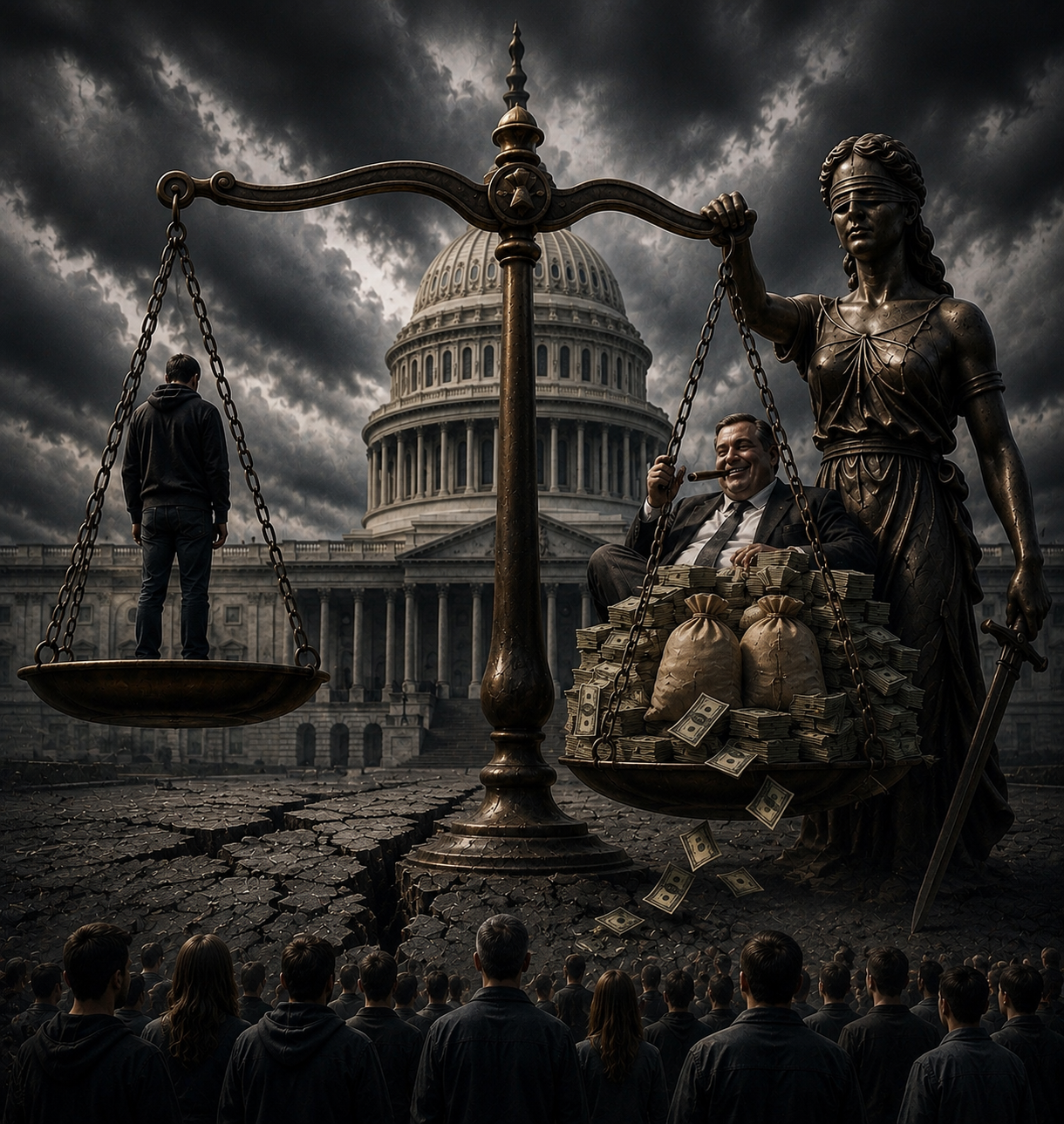
The Silent Erosion of Trust
A society is not sustained solely by laws, towering skylines, military strength, or economic prosperity. Beneath all of these lies something far more powerful, yet invisible: trust.
When citizens trust one another and have confidence in their public institutions, uncertainty diminishes, cooperation flourishes, and the future appears more hopeful. But when that trust begins to weaken, even institutions that appear strong on the surface gradually begin to deteriorate from within.
In recent years, many developments in the United States have led millions of Americans across the political spectrum to question whether public institutions are operating with the impartiality, consistency, and independence that democracy requires. Debates surrounding elections, the justice system, presidential pardons, political investigations, judicial appointments, and the role of federal agencies have become more than legal or constitutional disputes. They have evolved into profound psychological and sociological questions that shape how citizens view their government, one another, and the nation’s future.
The strength of a democracy depends not only on fair laws but also on the widespread belief that those laws are applied equally to everyone.
When people no longer believe that justice is administered without regard to wealth, political influence, or personal connections, they gradually lose faith in seeking justice itself. When the perception grows that some individuals receive preferential treatment while others face harsher consequences for similar conduct, respect for the rule of law inevitably declines.
Likewise, when merit appears secondary to political loyalty or financial influence, people begin to question whether hard work, integrity, and competence are still rewarded. What is lost is not merely opportunity. It is hope.
Politics has become one of the most visible arenas where public trust is tested.
Healthy democracies expect vigorous debate and changing opinions. Leaders may revise their views as circumstances evolve. However, trust weakens when campaign promises are abandoned without explanation, when yesterday’s principles are replaced by today’s political convenience, or when public officials promote conspiracy theories that undermine confidence in democratic institutions without persuasive evidence.
Eventually, one question begins to dominate public thinking:
Can citizens still trust what their leaders say?
This question reaches beyond politics. Societies often mirror the conduct of those who govern them. When public officials routinely excuse inconsistency, exaggeration, or selective accountability, similar behaviors gradually become normalized throughout society. Promises lose their meaning. Agreements become less reliable. Suspicion slowly replaces confidence.
One of the most contentious issues in recent years has been the use of presidential pardon powers. The Constitution grants presidents broad authority to issue pardons, and that power has long been part of the American legal system. Yet whenever pardons appear to favor political allies, campaign supporters, or individuals closely connected to those in power, many citizens question whether equal justice is being upheld. Regardless of one’s political affiliation, perceptions of unequal treatment can damage confidence in the fairness of government.
The same concerns arise whenever the Department of Justice is viewed, rightly or wrongly, as serving political interests rather than enforcing the law impartially. Public confidence depends not only on justice being done but also on justice being seen to be done without fear or favor.
Confidence in elections has also become deeply polarized. Free societies depend on citizens accepting legitimate election results while allowing lawful challenges when supported by credible evidence. When large numbers of people lose confidence in electoral outcomes, whether because of misinformation, political rhetoric, or genuine administrative concerns, democracy itself becomes more fragile.
Declining trust extends well beyond government.
Fraud has become increasingly sophisticated. Artificial intelligence, deepfake technology, identity theft, online scams, investment fraud, phishing attacks, and social media deception have become common features of modern life. Americans now approach unfamiliar phone calls, emails, charities, and investment opportunities with caution rather than confidence.
Suspicion has become the default.
Perhaps the greatest tragedy is that honest people pay the highest price. In societies where trust weakens, integrity is no longer assumed. It must constantly be proven. Businesses, charities, journalists, judges, scientists, educators, and ordinary citizens all find themselves questioned before they are believed.
Economic uncertainty further accelerates this process. When people lose confidence in the future, they become hesitant to invest, reluctant to start businesses, and cautious about making long-term commitments. A nation gradually shifts from building tomorrow to merely surviving today.
Yet history teaches that civilizations are built by people willing to invest in the future because they trust the institutions that protect their rights and opportunities.
The most dangerous aspect of losing trust is that it rarely disappears overnight.
A bridge may collapse in an instant, but confidence erodes one disappointment at a time. First, people stop trusting institutions. Then they stop trusting one another. Eventually, they retreat into political tribes, social bubbles, and personal self-interest. Society becomes less a united nation than a collection of competing groups sharing the same geography.
Fortunately, trust can be rebuilt.
It cannot be restored through slogans, campaign speeches, or partisan victories. It returns when leaders consistently honor their commitments, when laws are enforced equally regardless of political affiliation or wealth, when public institutions remain independent, when merit outweighs favoritism, and when accountability applies to everyone.
Trust grows through actions, not rhetoric.
America’s greatest strength has never been its wealth alone. It has been the belief that no individual stands above the law and that every citizen deserves equal justice under it.
The future of the United States depends not only on economic growth or military power but on restoring confidence that democratic institutions serve the Constitution rather than any political party or individual.
The true wealth of a nation is measured not only by its gross domestic product or financial markets but by the confidence its citizens have in one another and in the institutions created to protect their liberty.
When trust disappears, democracy weakens.
When trust is restored, hope returns with it.