
WHILE TRYING TO DESTROY SOMEONE ELSE’S TREE
A man had a large, beautiful tree in his neighbor’s garden, but he couldn’t stand it. Whenever the wind blew, leaves fell into his own garden, and he had to clean them up every day. Over time, his resentment grew so strong that he stopped seeing the tree’s beauty, the shade it provided, and the value it added to the surroundings. To him, the tree had become nothing more than a nuisance.
One night, he secretly poured a powerful acid around the tree’s roots. All he wanted was for the tree to die so he would never have to deal with its leaves again.
A few days later, the leaves began to wither, and the branches started to dry out. Seeing that his plan was working, the man was delighted. He thought he would no longer have to clean his garden.
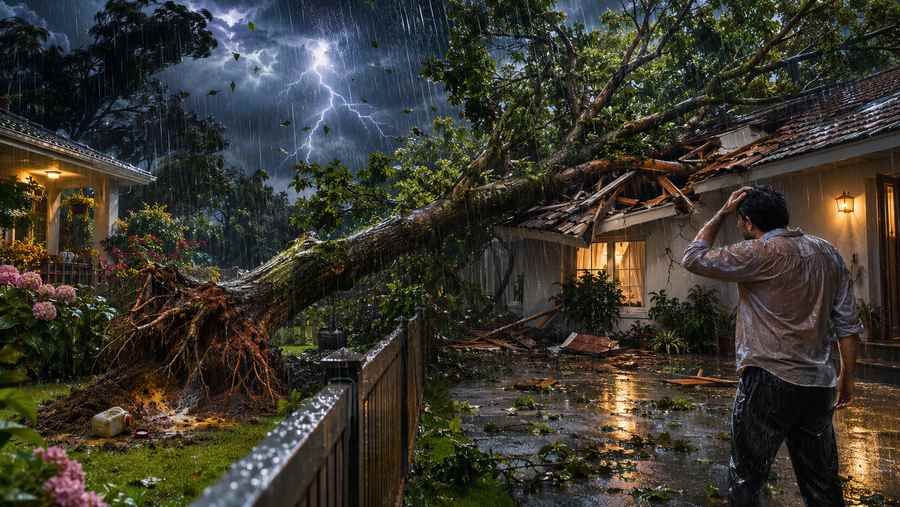
Then, one night, a violent storm struck. With its roots damaged, the tree could no longer withstand the wind and toppled over. Unfortunately, the wind drove it straight toward the man’s house. The enormous tree crashed onto the roof, breaking it apart and causing serious damage to the house.
Only then did the man realize that, in trying to get rid of his neighbor’s tree, he had damaged his own home as well.
There was something he had failed to consider: the tree’s roots did more than keep it standing. They also helped hold the soil together. By destroying the tree, he had removed a source of support that helped protect his own property.
We encounter similar situations in life. Sometimes, another person’s success, happiness, or possessions make us uncomfortable. We don’t want to see them doing well, so we try to put obstacles in their way. We belittle their achievements, talk about them behind their backs, and attempt to damage their reputations. While doing all this, we fail to consider that the harm we cause others may eventually come back to hurt us.
Yet making someone else less happy does not make us happier. Another person’s failure does not make us more successful. If we spent the time and energy we devote to pulling others down on improving ourselves, we might find ourselves in a much better place. But sometimes, instead of making our own lives better, we become preoccupied with making someone else’s life harder.
Besides, not everyone who bothers us is our enemy. Sometimes, a person whose criticism we dislike points out a weakness we have failed to recognize. Sometimes, another person’s success helps us understand what we, too, are capable of achieving. Instead of seeing their presence as a threat, we can treat it as an opportunity to learn and grow. In doing so, we stop trying to change others and start focusing on what we can change in our own lives.
Of course, this does not mean we should turn a blind eye to injustice or remain silent when people harm us. We must defend ourselves when necessary, protect our boundaries, and stand up against wrongdoing. But protecting ourselves and deliberately trying to hurt someone else are not the same thing. One means setting a healthy boundary; the other often means allowing anger and jealousy to control our actions.
Sometimes, people recognize the consequences of their mistakes only when their own lives begin to suffer. But the real challenge is not to regret our actions after the damage has been done. It is to think about their possible consequences before taking the first step.
The man who destroyed his neighbor’s tree had wanted to free himself from the nuisance of a few fallen leaves. Instead, he left his own home vulnerable to serious damage. Perhaps all he needed to do was sweep up the leaves. Putting up with a minor inconvenience might have been far easier than paying a much greater price in the end.
We make similar mistakes in our daily lives. We turn disagreements into bigger conflicts than they need to be, declare people who think differently from us to be our enemies, and struggle to accept someone else’s success. Yet we do not have to win every argument, defeat every rival, or eliminate every difference. Sometimes, stepping back is the wisest choice. Sometimes, it is better to let something go. And sometimes, the best thing we can do is direct our energy toward our own work.
When we find ourselves thinking about harming someone else’s life, it may be enough to ask ourselves one simple question:
“While trying to destroy their tree, could I also be damaging the roots that keep my own house standing?”
Because in the struggle to pull someone else down, we may end up losing the very ground beneath our own feet. And by the time we realize what we have done, it may already be too late.